Conduction System Pacing · Recovery
LBBAP Pacemaker Wound at 70 Days: What Normal Healing Looks Like
A clinical-education look at the device-pocket incision roughly ten weeks after left bundle branch area pacing — the normal remodeling scar, the pink discoloration phase, and the signs that should prompt a closer look.
The question
The assessment
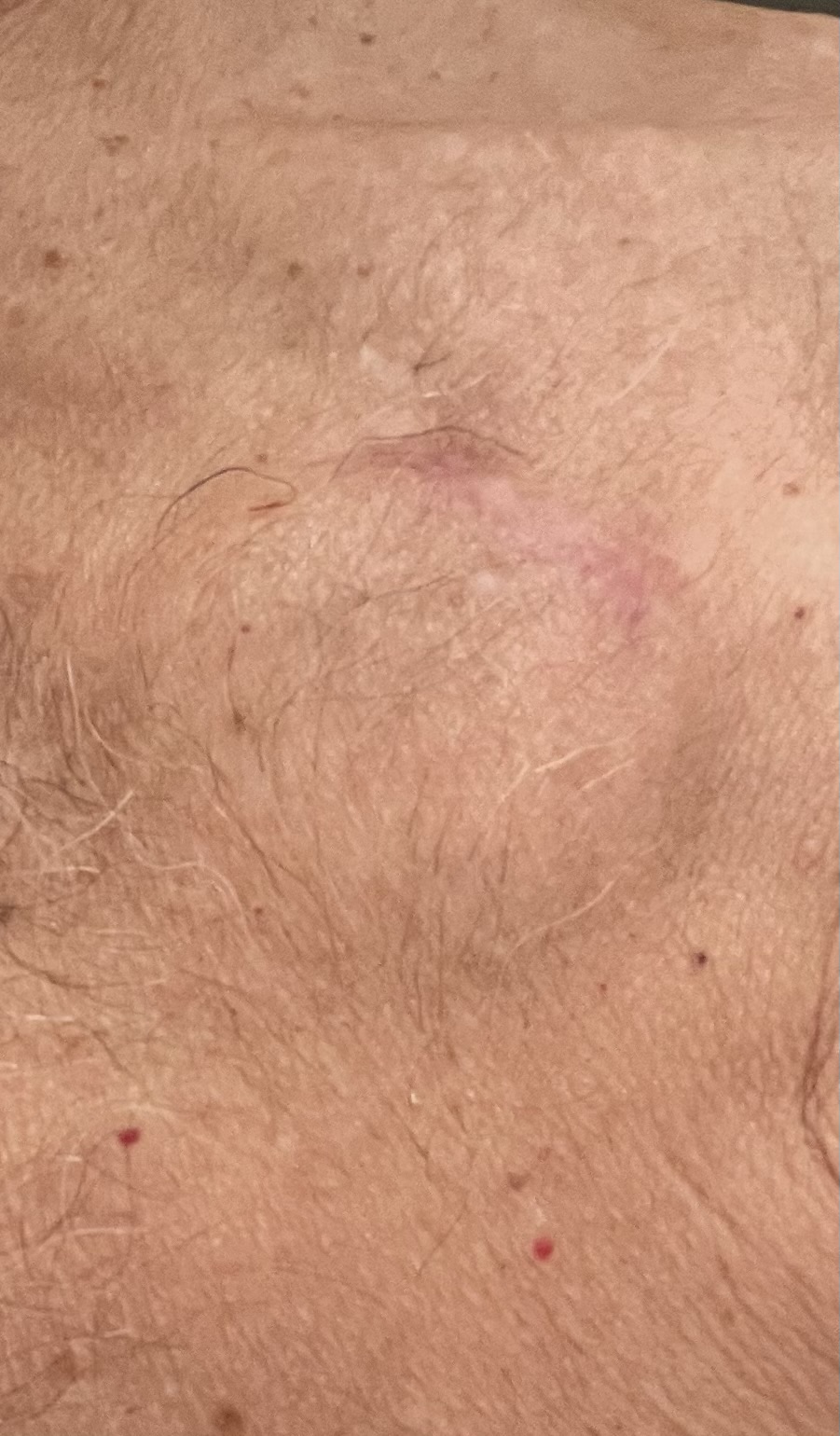
At 70 days out, the appearance shown is consistent with a normally maturing surgical scar rather than a problem wound. The following is general educational interpretation of typical post-implant findings, not a substitute for in-person evaluation by an electrophysiology team.
What looks reassuring
The incision line is closed and intact, with no gaping, no dehiscence, and no visible suture material or extruding sutures. The skin surface is continuous, and hair follicles repopulating across the area point to healthy, well-perfused tissue. There is no visible drainage, crusting, ulceration, or fluctuant swelling, and no obvious tethering or distortion of the overlying skin that would suggest a fluid collection or hematoma beneath. The pocket itself does not appear tense or bulging.
The pink discoloration along the scar
The reddish-pink to faintly violaceous band along the scar line is the most prominent feature, and at roughly ten weeks it most often reflects the normal vascular phase of scar remodeling. New capillaries make a healing scar look pink or red for weeks to months before it fades toward pale or white. This can appear more pronounced in fair skin and after sun exposure. In isolation, color at this stage is usually not alarming.
What would change the picture
Certain features shift the interpretation from a remodeling scar toward pocket infection or device erosion, which warrant prompt clinical attention given the implanted hardware:
- Redness or discoloration that is expanding rather than fading over the following weeks.
- Warmth, increasing tenderness, or a tense or bulging pocket.
- Any drainage, crusting that reopens, or a soft fluctuant area suggesting fluid.
- Fever or chills.
- The device feeling as though it is eroding toward the surface or thinning the overlying skin.
What a photo cannot show. Tactile and clinical findings — subtle warmth, tenderness, or what is happening inside the pocket beneath the skin — cannot be assessed from an image. Any palpable concern is best evaluated directly by the implanting team rather than from a photograph.
How healing typically progresses from here
From around the ten-week mark, the expectation is gradual fading: the pink along the scar continues to lighten over the next several months as the remodeling phase winds down. Scars keep maturing for up to a year or so, so the final appearance is paler and flatter than the early healing stage. Where cosmetic outcome matters, keeping the scar line out of direct sun while it remains pink helps prevent hyperpigmentation, and silicone gel or sheets are the topical option with the most supportive evidence for scar appearance.